ESP32 Special: Two Offline Voice-AI Builds Debut While a New Chip Powers a Display Board
Two fresh ESP32 voice-AI repos go fully offline, a mystery ESP32-S31 chip shows up on a display board, and an ESP32 radio hack learns to transmit.
Tag
20 posts

Two fresh ESP32 voice-AI repos go fully offline, a mystery ESP32-S31 chip shows up on a display board, and an ESP32 radio hack learns to transmit.

OpenBMB squeezes a 35B MoE vision model onto an iPhone, Google shrinks multimodal search to 191MB, and a $7 ESP32 learns to tap a real iPhone's screen.

Samsung's sub-1-bit quantization paper gets a reality check, plus fresh research on tiny LLMs and ESP32 voice silicon.

A dual-core Arduino runs robot policies on-device, a paper argues for skill-sized models over one big brain, and two ESP32 boards ship.

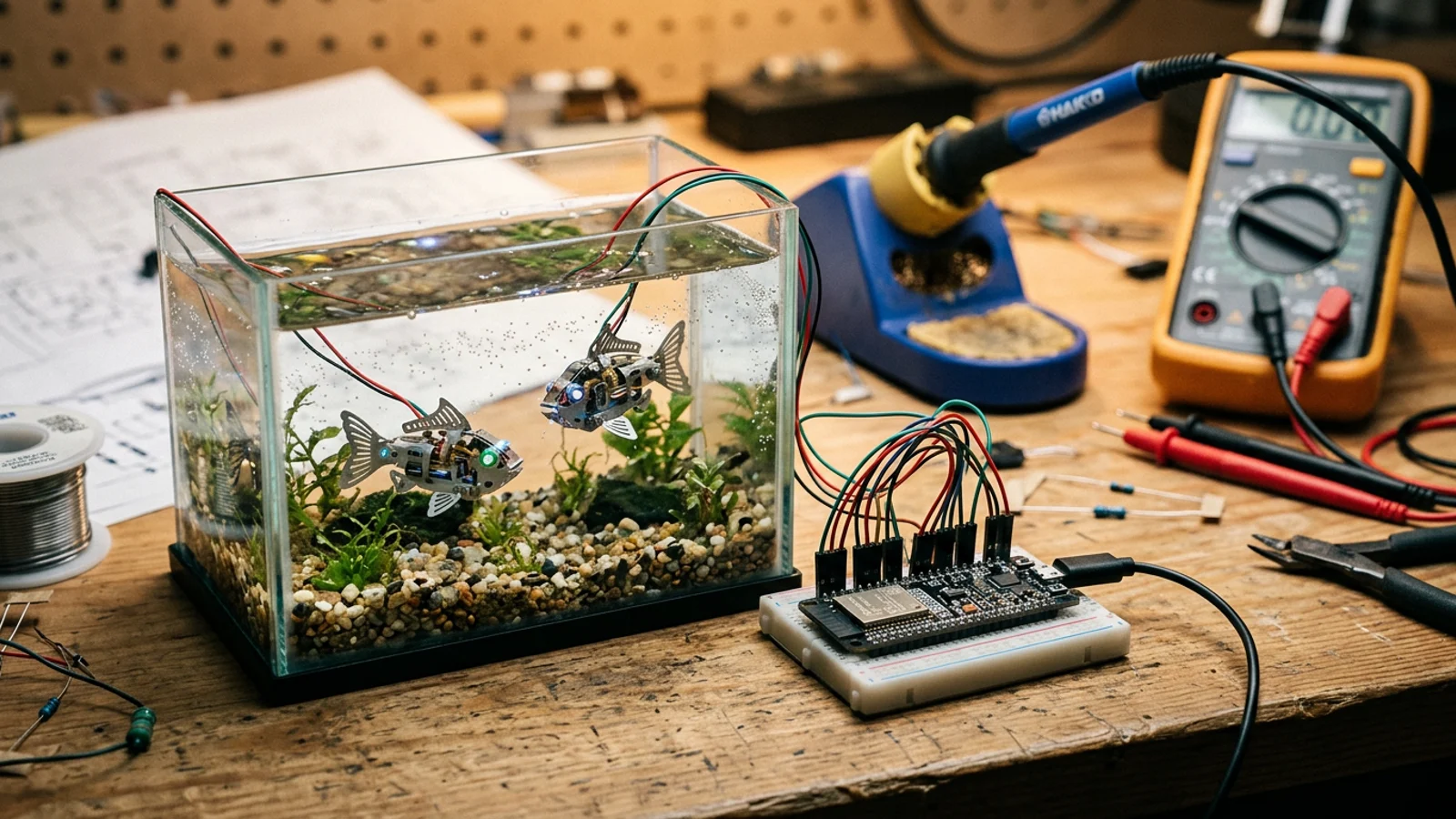
A distilled LLM runs a fish tank on an $8 ESP32-S3, four Raspberry Pi 5s share a 30B model, and a 2B decision model lands for edge agents.

Two ESP32 voice projects lean on cloud AI while a maker's e-ink reader builds the hardware the next on-device model will need.

Meta ships ESP32 and Linux SDKs for its Muse AI, Qualcomm's next phones get 2nm NPUs, and a 68KB brain gives a cheap robot arm memory.

A BitNet cluster splits an LLM across seven ESP32-S3 boards, a 2-bit tool-calling model lands on GitHub, and a quantization paper gets llama.cpp 15x faster on an M4 Pro.

A tiny GPIO-control model and a Japanese TTS join the ESP32 pile-up while Raspberry Pi raises prices and a Jetson robot chases bubbles.

A full day inside the ESP32 world: chatty microcontroller LLMs, a $5-chip speech model, and two new boards from Espressif's own community.

From a Qualcomm earbud chip to an ESP32-S3 that hears, thinks and speaks with no cloud, edge AI keeps shrinking into pockets and ears.

Community builders push token throughput further this week — via SSD-streamed MoE experts, prompt-lookup drafting, and a wrapper for Apple's built-in on-device LLM.

Liquid AI ships a 2.6B agentic model for edge hardware, a 144M classifier skips text generation entirely, and a new paper shows byte-level LLMs can beat tokenized ones with sc

An RP2350 draws faces from noise, an ESP32-S3 writes stories, and AI smart glasses squeeze in a 1-bit model — all without a server.

Three ESP32 builds this week show the chip's range — a reactive desk companion, motion-sensing drumsticks, and a scripting OS — none of them running a language model.

NVIDIA posts a 6.4x MLPerf edge win on Jetson AGX Thor, a dense TinyStories model skips the flash trick, and a paper splits VLA robots between cloud and a tiny local model.

A one-chip LLM, a Wi-Fi upgrade to Seeed's tiny displays, and Tuya's push to make ESP32 an AI-agent target, not just a Wi-Fi one.

A new 'Barista' model and a closer look at Google's Per-Layer Embeddings trick show what running an LLM on a microcontroller can and can't do.

On August 5, 2026 a 180.9M-parameter mixture-of-experts LLM ran on a $6-10 ESP32-P4 — and got two Hacker News points. The undercovered microcontroller AI story of the year.

In July 2026 a 28.9-million-parameter LLM ran fully on-device on an $8 ESP32-S3 at almost 10 tokens per second. Here's how the trick works, who built it, what's hype, and what you can actually build with a microcontroller LLM today.