OpenClaw vs. Anthropic: The Week the Subscription Era Ended for AI Agents
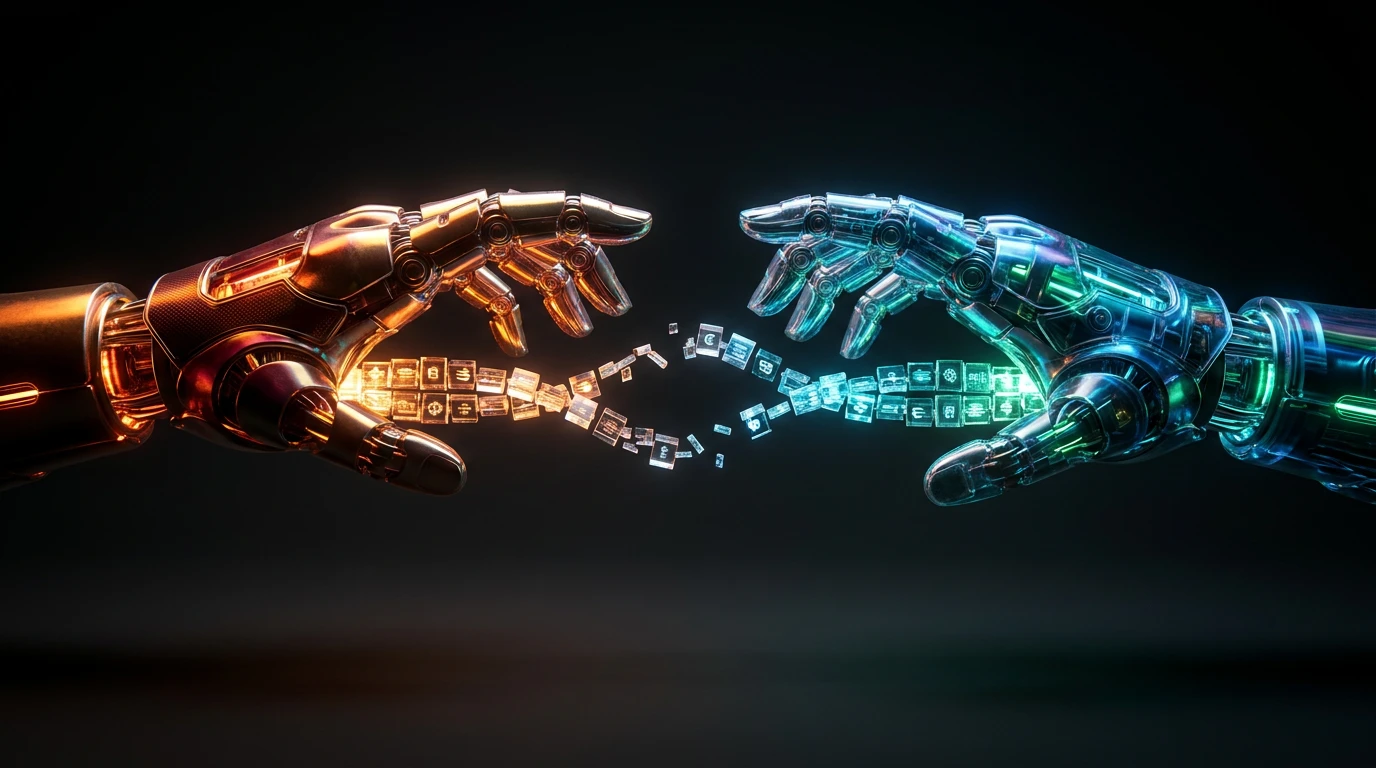
In April 2026, Anthropic blocked the year's most viral open-source agent framework from spending Claude subscriptions. The fight wasn't really about one developer in Vienna — it was about an unspoken truth the labs had been dodging for a year: chat is the past, agents are the interface, and subscriptions cannot price what comes next.
On the morning of Friday, April 11, 2026, an email arrived in the inboxes of every paying Claude Pro subscriber who had connected the OpenClaw agent to their account. It said, in effect, that their subscription was no longer valid for what they had been doing with it. By Monday, the policy was tabled by one week. By the weekend after that, half the AI industry had been forced to admit something they had been quietly hoping nobody would notice — that the interface to AI had moved, and that the subscription model came with it had not.
This is the story of how a single Austrian developer's side project broke the pricing assumptions of the frontier labs in four months flat, and what the resulting standoff tells us about the next year of AI product design.
The framework that was not supposed to win
OpenClaw shipped on November 24, 2025, under the unfortunate name "Clawdbot." Its creator was Peter Steinberger, the Austrian developer best known for selling PSPDFKit (now Nutrient) and then publicly disappearing from software for a few years to figure out what came next. What came next, by his own account, was the realization that AI had finally crossed the threshold where it could do the actual repetitive work of building software — and that the right interface to it was not a web app at all. It was the messaging apps people already lived in.
So Clawdbot was, at launch, a small open-source program you installed on your own laptop. It opened a persistent session with a large language model — Claude, GPT, DeepSeek, whichever you wanted — and exposed that session as a chatbot inside Signal, Telegram, Discord, iMessage, and WhatsApp. You messaged it the way you would message a colleague. "Clear my inbox of newsletters." "Book me on the 7 a.m. to Munich and forward the confirmation to Anna." "Pull the last week of cost rows from the production database and chart the anomalies." It opened a browser, ran a shell, read the files, made the call. Then it sent you the result.
This was not technically unprecedented. OpenAI had shipped Operator in early 2025; Anthropic had shipped Computer Use the year before that; Google had shown Project Mariner. The labs had been racing toward the agent interface for fifteen months. What was unprecedented was that Clawdbot worked, ran locally, was free, was open-source, and let you bring whatever model you wanted. There was no $200-a-month tier. There was no waitlist. There was no enterprise sales call. You ran a one-line installer and it was on your phone in ninety seconds.
Anthropic took notice of the name first. By late January 2026 the project was renamed Moltbot under trademark pressure. Three days later, on January 30, Steinberger renamed it again — to OpenClaw, the name that stuck. By that point the GitHub repository had crossed sixty thousand stars. By March 2, it was at 247,000 stars and 47,700 forks, putting it inside the top ten fastest-growing open-source projects of all time. On February 14, OpenAI hired Steinberger to work on its next-generation personal agent. The framework itself stayed open-source and continued to ship weekly.
What actually made it spread
It is worth being precise about what made OpenClaw move the way it moved, because the answer was not technical novelty. Every architectural piece had been demonstrated by a research lab before. What OpenClaw assembled was a particular set of distribution choices that no major lab was structurally willing to make:
- Messaging apps as the interface, not a new web product. You did not have to learn a new chat tool or open a tab. The agent met you on the channel you already checked thirty times a day.
- Local execution on your own machine, with full filesystem and shell access. The agent could touch your real files and run your real commands. This is the thing none of the cloud agent products will ever do for liability reasons.
- Bring-your-own-model. Plug in Claude, GPT-5, DeepSeek V3.5, a local model — your call, your bill. The framework was the agent. The model was a swappable component.
- Plugin marketplace (ClawHub) that turned every community-written skill into a one-line install. Within ninety days the ecosystem had over four hundred skills for things like booking flights, writing code, running SQL, controlling smart-home devices, and — increasingly — controlling real robots through ROS 2 bridges.
- Permissive license. MIT. Tencent and Z.ai built commercial services on top of it within weeks of its renaming.
None of these alone would have mattered. Together, they were a Trojan horse. OpenClaw made the agent layer feel inevitable rather than aspirational, and it did so without any of the labs having to ship it themselves.
The economics nobody wanted to say out loud
Here is the part that the press coverage in April 2026 mostly missed, and the part that explains why the standoff happened when it did.
A consumer chat product is cheap to run because users send short messages and read long answers and then go away. A typical Claude Pro user might consume a few hundred thousand tokens per month. The $20-a-month subscription comfortably covers it, with margin to spare.
An agent does not behave that way. An agent reads entire codebases into context. It runs multi-turn tool loops where every turn re-sends the accumulated history. It opens a browser, scrapes a page, decides the page is the wrong page, opens another one. It checks its own work. A single "clear my inbox of newsletters" task might burn two to five million tokens end-to-end. A "rebuild the Q1 financial model from these source documents" task might burn fifty million.
OpenClaw made it trivial for ordinary users to point this kind of workload at a Claude Pro subscription. The math broke immediately. A single power user could consume more tokens through OpenClaw in a week than the entire $20 monthly fee covered for a year. Multiply by two hundred and forty-seven thousand stars and the picture got bleak quickly.
The frontier labs had a private name for this problem internally — "subscription leakage" — and Anthropic was the first one to address it publicly. On April 11, they announced that effective April 18, users would no longer be able to route Claude subscription quota through third-party agent frameworks. Going forward, OpenClaw users would need to attach an API key with pay-as-you-go billing. The pricing change was framed neutrally, in terms of fair use and quality of service. Nobody believed the framing.
The standoff
Steinberger went public the same day. The post on his personal site was unusually direct for the genre: he stated that the OpenClaw Foundation had been given approximately seventy-two hours of notice, that he and OpenClaw Foundation board member Dave Morin had spent the weekend trying to reach Anthropic leadership, and that the only concession they had won was a one-week delay before the policy took effect. He did not call Anthropic a bad actor. He simply pointed out that an industry that wanted to claim moral leadership on AI safety could not, at the same time, treat the most-installed open-source agent framework on earth as a billing problem to be quietly removed.
The community response was sharper. Anthropic's developer relations team — historically among the most beloved in the industry — was hit with several days of frank criticism on X and on the Anthropic forums. A separate dispute about a temporary suspension of Steinberger's personal Claude account, which Anthropic later described as an erroneous automated action, made the story messier for another two news cycles. By Wednesday, April 15, the public conversation had stopped being about the policy specifics and had started being about the underlying question. Why was a $20-a-month subscription the right price for an agent?
It wasn't, of course. It never had been. Anthropic was simply the first major lab to be forced to admit it.
What the labs all did next
Within ten days of the OpenClaw announcement, every major frontier lab made a corresponding move, most of them quiet.
OpenAI announced that ChatGPT Plus subscriptions would, going forward, distinguish between "interactive" and "autonomous" token consumption, with autonomous consumption metered separately. Google updated the Gemini Advanced terms of service to add a clause about "high-volume programmatic use" that nobody had needed before. Mistral and DeepSeek, the two labs whose business models were already pure API, did nothing — and benefitted accordingly, capturing meaningful share of OpenClaw routing in the weeks after April 18. Anthropic itself shipped, on April 22, a new "Claude for Agents" tier explicitly priced for agentic workloads at a usage-metered rate — effectively re-pricing what OpenClaw had been the proximate cause of.
The framing that the labs settled on was that this was an unbundling, not a price hike. There is a defensible version of that argument. Subscription pricing for chat had implicitly cross-subsidized power users with light users, and the agent boom had made that subsidy untenable. Pulling the two product modes apart was honest, in some sense. But it was the kind of honesty that the labs would never have arrived at on their own, on this timeline, without a 31-year-old in Vienna shipping an MIT-licensed program from his laptop.
The paradigm shift, stated plainly
The April 2026 standoff is being read inside the industry as the moment three quiet shifts became impossible to ignore. They had all been visible for a year. They are now consensus.
First: the interface to AI is no longer a chat box. The interface is whatever messaging surface you already use, plus an agent that touches your real systems. OpenClaw demonstrated that this can be shipped, today, without lab cooperation. Every major lab is now building a first-party version of the same idea.
Second: the unit of work has changed from a conversation to a task. A conversation has bounded cost. A task does not. This breaks subscription pricing for the consumer products that defined the 2023–2025 era, and it shifts the economic gravity of AI back toward usage-metered API billing — which is, structurally, an enterprise business. The implication is uncomfortable: the consumer LLM subscription product, as launched by OpenAI in early 2023, has likely entered terminal decline.
Third: the labs no longer control the agent layer. This is the most important shift, and the one with the longest tail. For the first two years of the LLM era, the assumption was that the lab that trained the best model would also build the best product surface on top of it. OpenClaw broke that assumption in public. The best agent framework of early 2026 was not built by Anthropic or OpenAI or Google. It was built by one person, took ninety days to ship, and was downloaded onto millions of laptops before any lab could respond. The labs are now in a position they did not expect to be in — competing for distribution inside an ecosystem they do not own.
What it means for builders
If you ship software that talks to an LLM, three things changed in April 2026 that are worth internalizing.
Price your features in tokens, not in seats. The subscription bundle is no longer a defensible pricing layer for anything that wraps an agent. If your product is going to consume tokens unpredictably on a user's behalf, your business model has to pass that variability through. Hiding it inside a flat fee is what just broke for the largest labs in the industry; it will break for you at smaller scale faster.
Assume the interface is a chat app, not your dashboard. OpenClaw's adoption curve is the strongest available evidence that users will gravitate to the surfaces they already check — Signal, WhatsApp, iMessage, Discord — over any standalone web product, no matter how nicely designed. If your roadmap still has "build our own chat UI" in it, ask hard whether the alternative is shipping a Signal bot and a Telegram bot and a webhook.
Treat the model as a swappable component. OpenClaw routes the same task to Claude, GPT, DeepSeek, MiniMax, or a local model depending on cost, latency, and which provider has not just changed its terms of service. The lock-in story that the labs sold for the first two years — "build on our model and we'll be your platform" — has weakened materially. Designing your system to assume model swappability is no longer paranoid; it is now the default professional discipline.
What comes next
OpenClaw itself is still moving fast. The latest community work has pushed it past desktop tasks and into physical robotics, via a ROS 2 bridge that lets the same agent framework control Unitree humanoids, drone fleets, and any robot exposing a ROS 2 interface. Whether this becomes a serious robotics framework or a clever demo is genuinely unclear. The desktop version was a clever demo for about ninety days too.
The deeper question, the one that the April 2026 fight surfaced and did not resolve, is whether the agentic-execution layer is going to be open or closed. The labs would like it to be closed — controlled by them, priced by them, and integrated tightly with the models they train. The community pull, as expressed through OpenClaw's adoption numbers and through the response to Anthropic's policy change, is in the opposite direction. The most plausible read is that we end up with both — a layer of first-party agents from each major lab, sitting alongside a substantial open-source ecosystem that the labs cannot kill but also cannot fully ignore. The pricing model will look more like a cloud bill than like Netflix.
It took one developer in Vienna, four months, and a single contentious email from a billing team in San Francisco to make that future obvious. The thing that has felt inevitable since GPT-4 — that AI would stop being a thing you talk to and start being a thing that does work on your behalf — finally arrived, in public, in April. It arrived a year earlier than the labs had planned to ship it. That was not an accident.
Reporting in this piece draws on the Wikipedia OpenClaw entry, openclaw.ai's marketing site, Fortune's February 19, 2026 profile of Peter Steinberger, VentureBeat's coverage of the OpenAI relationship, and contemporaneous April 11–13, 2026 reporting from The Next Web, The AI Insider, TechBuzz, BigGo Finance, and Progressive Robot. Token-economics estimates are the author's own, based on observed agent traces.
Subscribe to new posts from theaivibe.org
Related Posts
Anthropic's AI Protein Design Run, Number by Number: 354 Binders, 27%, and What It Doesn't Prove
Anthropic gave Claude an entire protein binder design campaign — target research, epitope choice, tool orchestration, ranking — and synthesised every design it returned. 354 of 1,320 bound. Here is every figure from the paper, including the three targets where it failed.
The Hidden Cost of Embedding Model Drift in Production RAG
Your vector index and your query encoder drifted apart months ago. Retrieval quality is quietly collapsing, and nothing in your observability stack noticed.
The Future of Local AI: Every AI Lab Should Redesign Its LLM Architecture to Run on Your Laptop
Kimi K3 proved open-weight LLMs can reach the frontier — and proved they're far too big to run where users actually are. The next race isn't a bigger model; it's the architecture review that puts frontier AI on an ordinary laptop.